A visit to our Kona Salt Farm begins with the ocean in front of you. The story behind it reaches much farther—across the Hawaiian archipelago to remote islands and reefs where fishing nets and plastic threaten some of Hawaiʻi’s most extraordinary wildlife.
At Sea Salts of Hawaiʻi and our sister brand, Kona Sea Salt, our livelihood comes from the sea. We believe that brings a responsibility to help care for it. That is why 1% of our sales supports the Papahānaumokuākea Marine Debris Project, helping fund the demanding work of removing marine debris from reefs and shorelines throughout the Northwestern Hawaiian Islands.
Every purchase contributes to that commitment. And every farm visit gives us an opportunity to share why it matters.
Our ocean connection begins at HOST Park
Our Kona Salt Farm sits in a unique 7-acre salt farm setting on Keāhole Point, within Hawaiʻi Ocean Science and Technology Park, better known as HOST Park. Near Kona International Airport, this coastal community brings together businesses, researchers and educators working in ocean science, aquaculture and renewable energy.
For our salt makers, being part of HOST Park means a direct connection to the resource behind everything we make: deep ocean water drawn from 2,200 feet below the surface. At the farm, Kona sunshine drives evaporation while our team watches the salt crystals develop, then harvests them by hand.
That journey—from deep ocean water to the Hawaiian sea salt on your table—keeps us closely connected to this place. It also reminds us that our responsibility extends beyond the shoreline we see each day.
Every purchase contributes to that commitment. And every farm visit gives us an opportunity to share why it matters.

The elder islands of Hawaiʻi
Northwest of the main Hawaiian Islands lies Papahānaumokuākea, a roughly 1,350-mile stretch of islands, atolls, reefs, shoals and seamounts surrounded by an immense expanse of Pacific Ocean.
These are the elder islands of the Hawaiian archipelago. While Hawaiʻi Island is still being shaped by volcanic activity, the older islands to the northwest have spent millions of years eroding and slowly subsiding. Many now remain as low coral islands, atolls and shallow reefs.
There is very little dry land here, and an extraordinary amount of life depends on it. Approximately 14 million seabirds representing 22 species use these islands for breeding and nesting. The surrounding waters contain about 70% of the tropical shallow-water coral reef habitat in the United States and support more than 7,000 marine species.
Small beaches and coral-rubble islets provide places for Hawaiian monk seals to rest, molt and give birth, and for honu, Hawaiian green sea turtles, to nest. For wildlife that depends on these habitats, even a small stretch of shoreline matters.
Papahānaumokuākea is also a sacred cultural landscape, deeply connected to Native Hawaiian genealogy, voyaging and cultural practice. Its recognition as a UNESCO World Heritage Site honors both its natural and cultural significance.
Why does so much plastic reach somewhere so remote?
It is a question we discuss with guests at the farm. How can islands so far from cities and everyday human activity accumulate so much rubbish?
The answer lies in how the Pacific moves.
The North Pacific Subtropical Gyre is a vast system of circulating currents that can carry debris enormous distances. The Northwestern Hawaiian Islands sit where those currents and shifting zones of convergence make them particularly vulnerable. Their shallow reefs and atolls act like a comb, catching fishing gear and plastics carried across the ocean.
NOAA estimates that at least 115,000 pounds of derelict fishing gear accumulate on Papahānaumokuākea’s shallow coral reefs each year.
Lost and abandoned fishing nets, often called ghost nets, can snag on coral, breaking and smothering living colonies as waves and currents move them. They can also entangle monk seals, turtles and other marine animals long after their original use has ended.
On shore, bottles, caps, floats and fragments of plastic collect on remote beaches. Seabirds may mistake those pieces for food and feed them to their chicks.
Distance offers little protection from the debris. It does, however, make removing it much harder.
The people who make the journey
The Papahānaumokuākea Marine Debris Project, or PMDP, is a Hawaiʻi-based nonprofit dedicated to protecting these wildlife habitats from marine debris. Its crews travel to remote islands and reefs, where skilled freedivers and small-boat teams locate tangled fishing gear, cut it free and haul it away.
This is physically demanding work that requires specialized crews, equipment and extensive planning. Ship-based expeditions can mean weeks at sea, far from the services and support available on the main islands.
In 2024, PMDP surpassed one million pounds of marine debris removed since its founding in 2020. Its first two 2026 missions removed another 51,475 pounds from Kuaihelani, or Midway Atoll, and 48,680 pounds from several islands and reefs during August.
Together, those two missions removed more than 100,000 pounds of material that could otherwise continue damaging habitats and endangering wildlife.
Our 1% to the Ocean commitment helps support this ongoing effort. When you replenish your kitchen salt or choose a Hawaiian sea salt gift set, part of that purchase helps the people doing this work.
NOAA estimates that at least 115,000 pounds of derelict fishing gear accumulate on Papahānaumokuākea’s shallow coral reefs each year.

Giving recovered debris another purpose
Bringing debris back to the main Hawaiian Islands is another beginning. Where possible, recovered material can support research, education, recycling and reuse. Some fishing nets have also been processed through Hawaiʻi’s Nets-to-Energy program.
Researchers are exploring additional possibilities. The Nets to Roads initiative was developed to investigate how recovered fishing gear could be processed into plastic pellets for use in asphalt, with a goal of repurposing as much as 40 tons of ocean plastic annually.
Education is equally important. PMDP’s Koʻolaupoko Ocean Plastics Student Makerspace gives students opportunities to design and make new products from recovered plastics. It connects an enormous environmental problem with something young people can explore and help address themselves.
Removing existing debris protects wildlife today. Helping people understand the problem—and rethink what happens to plastic—supports the work ahead.

Bringing the story back to the farm
Most people will never visit Papahānaumokuākea. At our farm, we can help bring its story closer.
We have dedicated an educational space to the Northwestern Hawaiian Islands and PMDP’s work. Visitors can learn about the wildlife that depends on these places, how ocean currents carry debris across the Pacific and what it takes to remove it. We also welcome opportunities for conservation organizations, scientists, cultural practitioners and community members to share their knowledge at the farm.
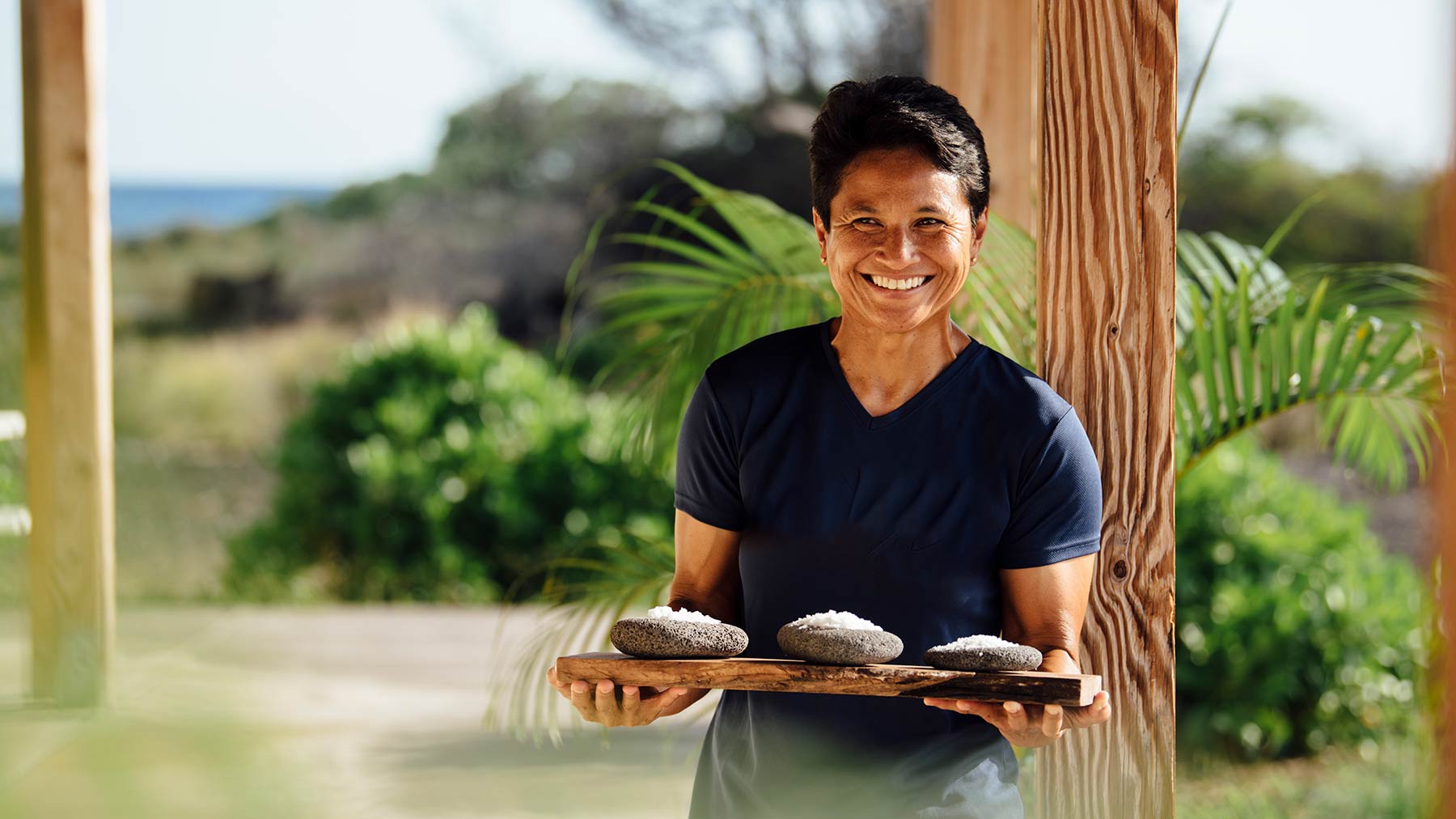
For Chief Salt Maker Melanie Kelekolio, that connection is personal. As she recounts in HOST Park’s feature on Sea Salts of Hawaiʻi, a school visit to the area’s Ocean Thermal Energy Conversion project in 1979 sparked her interest in working here. She was 13. Years later, she found herself making salt in the place that had captured her imagination.
Today, sharing the conservation message is part of her work with visitors.
“Not only are we giving 1% of our proceeds, but we're also spreading the word,” Melanie explains.
That care also takes practical forms on our own grounds. The farm provides dry laboratory space, office space and boat parking for Hawaiʻi Island’s ʻĀkoʻakoʻa coral restoration program. Our sustainability efforts include photovoltaic power, reusable glassware for tours, and reusable dishes and cutlery for our own events.
These efforts connect the way we operate, the stories we share and the work we help support.
Visit the source and be part of the story
On a Kona Salt Farm tour and tasting, you can see how deep ocean water becomes hand-harvested salt, learn about the significance of paʻakai in Hawaiian culture and taste our pure and flavored varieties. You can also visit the Kona Salt Farm Store to discover salts and locally made gifts to take home.
Whether you visit us on the Kona Coast, stock your pantry or send someone a gift from Hawaiʻi, you become part of our commitment to give back to the ocean that sustains us.
You can also donate directly to PMDP or follow its crews’ journeys to see the work your support helps make possible.
Mahalo for helping us care for the ocean, from our home at HOST Park to the remote reefs and islands beyond.